

QUICK TAKE on the

Iran Conflict

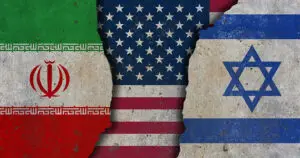
I have always found it difficult to write about the investment implications of war; it feels like it minimizes the devastation. Technically, we should not refer to the current conflict with Iran as a “war,” as Congress has yet to issue an official declaration. The last time Congress formally declared war was on June 5, 1942, against Bulgaria, Hungary, and Romania (following the 1941 declarations against Japan, Germany, and Italy). Consequently, the U.S. never officially declared war in Vietnam, Korea, Iraq, or Afghanistan; instead, Congress approved funding for military operations through authorizations.

Ultimately, from a market perspective, the implications center on capital. This conflict is centered in an economically vital region: 20% of the world’s daily oil supply and liquified natural gas (LNG), as well as 33% of the global fertilizer supply, traverses the Strait of Hormuz. Until hostilities cease, maritime transit will remain constrained, as these vessels are notoriously difficult to defend in narrow waterways.

The markets have remained relatively resilient despite the de facto closure of the strait. This resilience can be attributed, in part, to massive military expenditures. Government spending, regardless of the sector, tends to be stimulative to the economy in the short term. Furthermore, the disruption of global energy markets has arguably favored U.S. domestic oil production.


Investor confidence also stems from the expectation of a brief conflict. Perhaps the situation has already lasted longer than the administration anticipated, particularly following the rapid success of “Operation Absolute Resolve” in Venezuela earlier this year. Nevertheless, it remains in President Trump’s best interest to reach a resolution quickly. Prolonged conflicts are politically toxic, especially during an important midterm election year. Historically, the resolution of such conflicts tends to be a positive catalyst for the markets.

If the situation drags on, however, risks to capital markets will intensify. Elevated oil and gasoline prices will continue to fuel a stubborn inflation rate, making it difficult for the Federal Reserve to pivot toward interest rate cuts. Persistently high rates will increase debt service payments, further straining our large fiscal deficit. Additionally, increased military spending risks “crowding out” other essential services. Under these pressures, the most likely scenario is that President Trump will negotiate a deal.


As of now, we are not altering our portfolio construction. Once the conflict concludes, we expect the long-term trends described in our Go for the Gold newsletter to resume.

more to read...

QUICK TAKE ON THE IRAN CONFLICT

QUICK TAKE on the Iran Conflict I have always found it difficult to write about the investment implications of war; it feels like it minimizes the devastation. Technically, we should not refer to the current conflict with Iran as a “war,” as Congress has yet to issue an official declaration. The last time Congress formally declared war was on June 5, 1942, against Bulgaria, Hungary, and Romania (following the 1941 declarations against Japan, Germany, and

Read More »

Going for the Gold

The “Big Pit” – Kalgoorlie, Australia Go for the Gold The winter Olympics took place this past quarter, and US athletes took home a record twelve gold medals. Those medals are worth more than at any point in history as the price of gold has skyrocketed over the past few years, surpassing $5,000 per ounce this quarter, roughly doubling its price over the past year. Gold is a tricky asset to analyze. The focus of

Read More »

The Taoist Farmer

The Taoist Farmer “There was a farmer whose horse ran away. That evening, the neighbors gathered to commiserate with him, since this was such bad luck. He said, ‘Maybe.’ The next day the horse returned, bringing with it six wild horses, and the neighbors came exclaiming at his good fortune. He said, ‘Maybe.’ The following day, his son tried to saddle and ride one of the wild horses, was thrown, and broke his leg. Again,

Read More »